I know many of you do not like biodiesel and you have arguments that sometimes tie biodiesel to ethanol and the food vs fuel debate. The National Biodiesel Board www.nbb.com can knock down that argument.www.nbb.com
continued at Daily Kos...
I know many of you do not like biodiesel and you have arguments that sometimes tie biodiesel to ethanol and the food vs fuel debate. The National Biodiesel Board www.nbb.com can knock down that argument.www.nbb.com


Dear Mr. President:
I'm a small farmer,which means I'm a blue collar entrepreneur. I don't mind hard work, and I don't need fancy benefits. All I want to do is to take care of my family, my farm, my animals, my community and the welfare of the country. But every time I try to do what I know will work, I meet another regulation/rule/legislation/policy that makes it impossible or impractical.
I raise the smallest of dairy goats, which make the smallest hoofprints on the planet, contribute to the soil, diversity of the farmyard, health of my family, and make the most amazing milk for cheese and yogurt. But they don't make enough to meet most industrial standards for equipment. I don't want to have different goats, and more goats isn't an option because of the nutrition and space needs that they have. But I don't need more goats, if the regulations were reasonable. If I could sell to my neighbors without fear of the government, making a living for my family would be much easier. There is much more demand for goat cheese than there are providers, because the regulations are geared toward industrial dairying, which goats don't thrive under.
"In the Solar Thermal Electrochemical Photo (STEP) carbon capture process, the sun’s visible light and heat are used to capture large amounts of carbon dioxide from the atmosphere and convert it to solid carbon for storage or carbon monoxide for fuel generation. Image copyright: Stuart Licht, et al. ©2010 American Chemical Society."
Potentially this is good news, but don't get too excited. It's not just about carbon dioxide. And even if it works, there are aspects to consider.
 Welcome to the eKos Earthship, your one-stop-shop for green diaries and series.
Beneath the fold you will find news and notes, community announcements, and our eco-diary roundup.
Peruse the eKos Library to find previously listed diaries. You can also follow eKos on Twitter.
Tonight's editor: boatsie
All views expressed by today's editor do not necessarily represent those of eKos or eKos listed diarists.
The former chief electronics tech at Deepwater Horizon dropped a bombshell in testimony today--the main gas alarm had been deliberately disabled.
The worker, Mike Williams, chief electronics technician aboard the Transocean rig, said the general safety alarm was habitually set to "inhibited" to avoid waking up the crew with late-night sirens.
"They did not want people woke up at 3 a.m. from false alarms," Mr. Williams told the federal panel of investigators in this New Orleans suburb. Consequently, the alarm did not sound during the emergency, leaving workers to relay information through the loudspeaker system.
Williams also said that for at least five years, a system for removing dangerous gas from the drilling shack had been in bypass mode--and apparently Transocean's entire fleet ran similar systems in bypass.
If I'm the official who ordered those alarms disabled, I'd have a lawyer on speed dial.
cross-posted at Intlawgrrls
Today a Dutch court handed down a really important decision in a case that has haunted me for years. It hasn't gotten the notice I think it deserves. Particularly in light of the BP fiasco, this case is a reminder not to buy the nonsense that corporations can be trusted to do the right thing. Indeed, this case is a cautionary tale of just how irresponsible and negligent supposedly responsible international corporations can be, and how they get away with it.
Four years ago, Trafigura illegally dumped toxic wastes in various locations around the city of Abjidjan in Cote d' Ivoire. More than 100,000 people were sickened and 15 died from exposure to the wastes.
Today, a Dutch court found Tranfigura criminally liable for offenses associated with this incident.
Today the Union of Concerned Scientists hosted the first of four webinars presenting the results of The National Academies work on climate change with America's Climate Choices.
If you are interested in participating in any of the other webinars, email sciencenetwork@ucsusa.org and ask for information.
From America's Climate Choices
The Department of Commerce Appropriations Act of 2008 (Public Law 110-161) calls for the National Oceanic and Atmospheric Administration (NOAA) to execute an agreement with the National Academy of Sciences to establish a committee that will "investigate and study the serious and sweeping issues relating to global climate change and make recommendations regarding what steps must be taken and what strategies must be adopted in response to global climate change, including the science and technology challenges thereof."
Today's webinar summarized the first of the reports.
Who would do such a thing???
From the Hayes Valley Farm (SF) blog:
Sometime between the late afternoons of Monday July 19 and Tuesday July 20, an unknown person(s) intentionally sprayed pesticide into the entrances and ventilation holes of the two San Francisco Bee-Cause (SFBC) honey bee colonies at HVF. The same person(s) tried to do the same to a third, smaller colony on site, belonging to Chris Burley.
it goes on:
The killing of the two mature SFBC colonies was complete. The thousands of bees that died immediately or rushed to the entrance for fresh air fell onto the screened bottom board and clogged up the entrance to the hive, making escape impossible for any of the other bees and turning each hive into a gas chamber. Chris Burley’s colony sustained a loss of approximately 60-70% of its individuals.
The climate bill blame game has begun. When I first started writing this post about the so-called death of the climate bill, I literally pointed the finger at just about everyone, including myself. The anger poured out, and I was frank in my assessment as well as unforgiving in the motives behind this latest setback.
After I was done with my self-loathing tantrum, the kids ran in the door from camp and I was swept up in the lovely reality of my family's banter. It is summer, so the pace in our home is a bit more relaxed in the evening. We aren't quite as quick to rush through dinner, toss the kids in a bath, and then march them off to bed. Ice cream and extra cuddles are relished, and I am reminded each year at this time why I do this job.
Later, after progeny were tucked in, I went back to my draft blog post to spruce it up. I reread my rage, disappointment, and irrational ramblings and was embarrassed. And I asked myself "What good is all this blame going to do?"
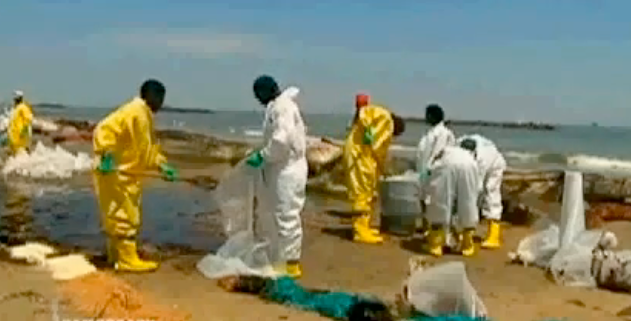 When the BP oil gusher mess first began, BP hired prison labor in order to reap tax benefits instead of hiring coastal residents whose livelihoods crashed with the explosion of the wellhead. When the community expressed their outrage, BP did not stop the practice of using prison labor. No, apparently BP simply tried to literally cover-up the use of prison labor by changing the clothing worn by the inmates to give the appearance of a civilian workforce. Big surprise.